Children's House
3 – 6 years · Where independence takes root.
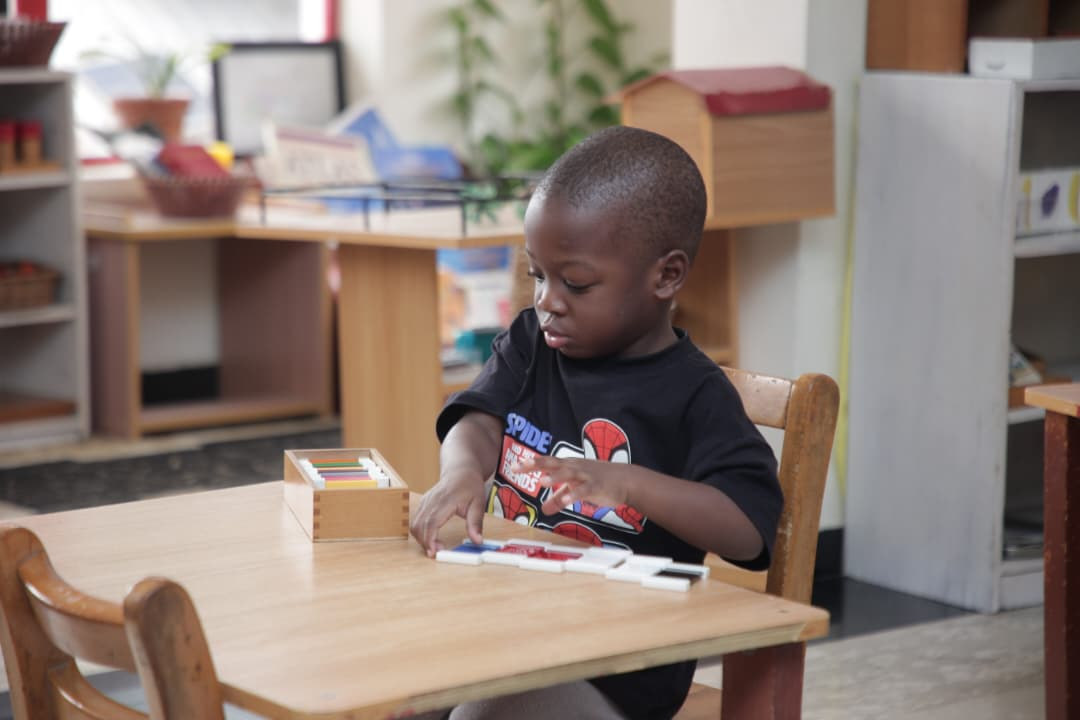
3 – 6 years
Where independence takes root.
An environment where children develop concentration, independence, practical skills and strong foundations for lifelong learning.
Why it matters at this stage
Children's House highlights
Independence
Children are guided to care for themselves, their environment and each other.
Concentration
The work cycle supports deep, sustained focus on meaningful activity.
Practical Skills
Real-life activities develop fine motor control, order and responsibility.
Foundations
Language, mathematics, culture and the arts build strong academic foundations.
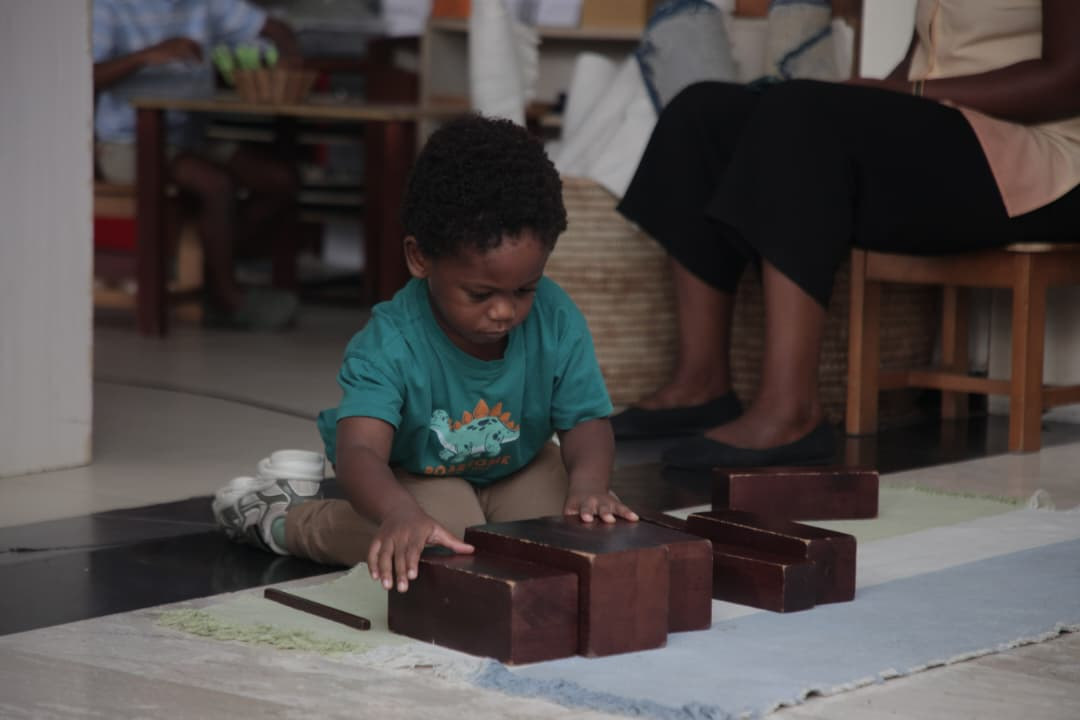
Inside the classroom
What children experience
- Practical life: care of self, environment and others
- Sensorial materials that refine the senses
- Language: sounds, writing, reading and expression
- Mathematics: concrete to abstract
- Cultural studies: geography, biology, history
- Grace and courtesy, social skills and independence
The Montessori classroom
Areas of the prepared environment
Every Montessori classroom is organised into curriculum areas that invite exploration and build skills over time.
Practical Life
Pouring, washing, polishing, preparing snacks and caring for plants and animals.
Sensorial
The pink tower, colour tablets, geometric solids and sound boxes refine the senses.
Language
Sandpaper letters, movable alphabet and reading games build the path to writing and reading.
Mathematics
Number rods, golden beads and bead chains make arithmetic concrete and joyful.
Geography & Science
Puzzle maps, land and water forms, and experiments open the wider world.
Art & Music
Freedom with materials, appreciation and performance nurture creativity.
Montessori, for families
What families often want to know
- Children stay in the same classroom for three years — building mastery, leadership and belonging.
- The three-hour work cycle lets concentration blossom instead of being interrupted by timetables.
- Reading and mathematics emerge naturally from concrete materials, never forced.
- Grace and courtesy are taught explicitly — children learn to resolve conflict with words and respect.
- The mixed-age group means older children mentor younger ones, deepening their own understanding.
A day in the Children's House
The rhythm of the day
Is your child ready?
Signs of readiness families often notice
Come and see the Children's House for yourself.
Visit the classroom, observe the children at work and meet our educators.
Book a Visit Apply Now